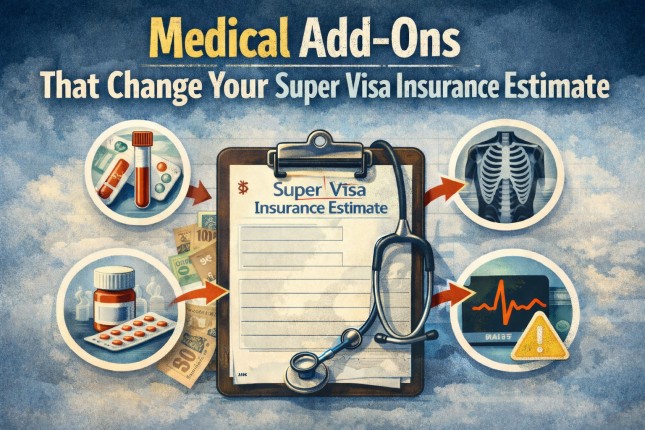
When families begin planning insurance for parents or grandparents visiting Canada under the Super Visa program, the first thing they usually look at is the estimated premium. Online tools and advisors can quickly generate numbers, but those estimates are rarely final. One of the biggest reasons is medical add-ons. These optional features can significantly adjust pricing, sometimes in ways families do not expect. In 2026, understanding how medical add-ons work is essential for anyone reviewing Super Visa Insurance Quotes and trying to balance affordability with real protection.
Medical add-ons are designed to enhance coverage beyond the basic requirements. While they can be valuable, they also influence insurance estimates in specific and sometimes subtle ways. Knowing which add-ons matter, and which ones may be unnecessary, helps families make informed decisions rather than reacting to unexpected price changes.
What Medical Add-Ons Really Are
Medical add-ons are optional coverage enhancements that extend or modify standard insurance benefits. Basic Super Visa policies are built to cover emergency medical care, but they may not address every possible situation a visiting parent could face.
Add-ons can broaden coverage, reduce financial risk, or increase comfort during treatment. However, each add-on introduces additional risk for the insurer, which is reflected in the premium. This is why two estimates for the same applicant can differ noticeably depending on which medical add-ons are selected.
Pre-Existing Condition Coverage Add-Ons
One of the most impactful add-ons is coverage for stable pre-existing conditions. Many parents and grandparents have ongoing medical histories, even if those conditions are well managed. Without an add-on, most standard policies exclude treatment related to pre-existing conditions entirely.
Adding this coverage often increases the estimate because insurers are assuming a higher likelihood of claims. The definition of “stable” varies by provider and usually includes specific timeframes with no changes in medication, symptoms, or treatment.
For families, this add-on can be essential, but it also explains why an initial low estimate rises once medical history is factored in. It is a deliberate cost increase tied to meaningful protection.
Prescription Medication Enhancements
Basic emergency coverage often includes medication administered during hospital stays, but outpatient prescriptions may be limited or excluded. Some policies offer add-ons that extend prescription drug coverage after discharge or during follow-up care.
This add-on can be particularly useful for parents who may need short-term medication following an emergency. However, it also increases the insurer’s exposure to recurring costs, which influences the premium.
Families sometimes overlook this detail when comparing estimates and are surprised when adding prescription coverage changes the price more than expected.
Emergency Dental and Vision Add-Ons
Dental emergencies, such as infections or accidental injuries, can be costly and are not always fully covered under standard medical plans. Vision-related emergencies may also fall outside basic coverage.
Add-ons for emergency dental or vision care fill these gaps, offering peace of mind for scenarios that are not uncommon among older visitors. Because these services are expensive and unpredictable, adding them can noticeably raise the insurance estimate.
The key is deciding whether these risks justify the additional cost based on individual health and travel plans.
Reduced Deductible Options
Some policies allow families to reduce or eliminate deductibles through optional add-ons. While this does not expand medical services, it changes how costs are shared during a claim.
Lower deductibles mean the insurer pays more from the start of treatment, which increases premiums. Families often choose this option for peace of mind, especially if they are concerned about managing out-of-pocket expenses during an emergency.
This add-on can transform a modest estimate into a higher one, even though the overall coverage amount remains the same.
Follow-Up Care and Extended Treatment Add-Ons
Emergency treatment does not always end at discharge. Follow-up visits, rehabilitation, or additional testing may be required. Some policies offer add-ons that extend coverage for follow-up care beyond the standard limits.
These enhancements are particularly relevant in 2026, as healthcare providers increasingly emphasize monitoring and post-treatment care. Adding this option can significantly affect pricing because it expands the duration and scope of covered services.
Families who do not understand this add-on may wonder why their estimate increases when they select more comprehensive care options.
How Add-Ons Affect Comparisons Between Policies
Medical add-ons are one of the main reasons why comparing insurance estimates can feel confusing. Two policies may look similar at first glance, but once add-ons are applied, the pricing difference becomes clearer.
When reviewing Super Visa Insurance Quotes, it is important to compare not just the base policy, but also which add-ons are included. A higher estimate may reflect broader protection rather than overpriced coverage.
Understanding this distinction helps families avoid assuming that a higher quote is automatically less competitive.
The Risk of Adding Too Much Coverage
While add-ons provide valuable protection, adding every available option can quickly inflate costs. Some families select multiple enhancements out of caution, without considering whether those benefits are truly necessary.
This approach can result in paying for coverage that is unlikely to be used. A more strategic method involves reviewing medical history, travel length, and risk tolerance to decide which add-ons make sense.
Insurance works best when it is tailored, not maximized without direction.
Balancing Cost and Protection in 2026
In 2026, healthcare costs continue to rise, and insurers are pricing risk more carefully than ever. Medical add-ons play a central role in shaping insurance estimates, reflecting both the realities of healthcare and individual needs.
Families who understand how add-ons influence pricing are better prepared to evaluate options, ask informed questions, and avoid frustration during the decision-making process. Thoughtful selection leads to coverage that feels both responsible and manageable.
When reviewing Super Visa Insurance Quotes, recognizing the role of medical add-ons transforms the experience from confusing to controlled.
Not sure which medical add-ons are worth the cost? Parent Super Visa Insurance Company helps families understand how coverage options affect pricing and choose insurance that fits real needs. Speak with their experienced advisors today and receive guidance that brings clarity, confidence, and value to your Super Visa insurance decision.