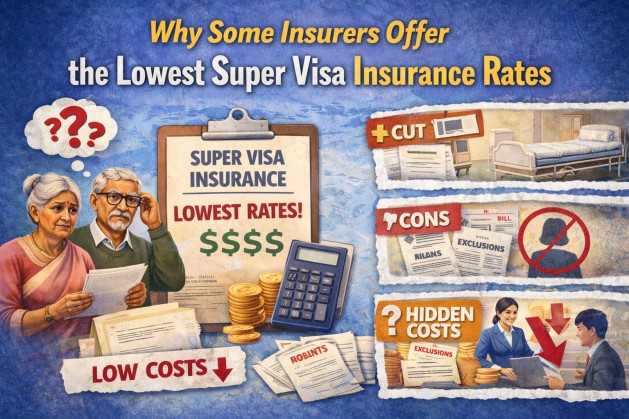
Super Visa insurance is one of the most important requirements for parents and grandparents visiting Canada. For many families, the cost of coverage becomes a deciding factor, which often leads to a common question: why do some insurers consistently advertise the lowest super visa insurance rates while others charge noticeably more? The answer lies in how insurance products are designed, priced, and managed behind the scenes.
Understanding these pricing differences helps families make informed decisions instead of choosing a policy based on cost alone. While lower rates can be appealing, they are rarely accidental. Insurers calculate premiums carefully, balancing risk, coverage scope, and long-term sustainability.
Risk Assessment Plays a Major Role
One of the main reasons certain insurers can offer more affordable premiums is their approach to risk assessment. Companies that focus on healthier age groups or apply stricter medical questionnaires tend to experience fewer high-cost claims. This allows them to price their plans more competitively without compromising their financial stability.
Insurers offering the lowest super visa insurance often rely on detailed underwriting. Applicants with stable health histories, no recent hospitalizations, and controlled conditions are considered lower risk. By filtering applicants this way, insurers reduce their exposure to large claims and pass the savings on to customers through lower premiums.
However, this also means not every applicant will qualify for the same low rate. Pricing can vary significantly based on age, medical history, and coverage duration.
Limited Coverage Helps Reduce Premiums
Another key factor behind low pricing is coverage structure. Insurers may design policies that meet Super Visa requirements but exclude optional benefits. Coverage may focus strictly on emergency medical treatment while limiting access to follow-up visits, prescription drugs, or diagnostic testing.
Policies positioned as the lowest super visa insurance may also include higher deductibles. While this reduces the insurer’s payout obligation, it shifts more financial responsibility to the policyholder in the event of a claim. From a pricing standpoint, this allows insurers to advertise lower upfront costs.
These policies can work well for families confident in the visitor’s health but may not be ideal for those seeking broader protection.
Operational Efficiency and Scale
Insurance companies with streamlined operations often have lower administrative costs. Digital applications, automated underwriting, and reduced reliance on physical offices can significantly cut overhead expenses. These savings directly affect premium pricing.
Larger insurers with high policy volumes can also spread risk more effectively. When claims are balanced across thousands of policies, companies can afford to maintain competitive pricing. This efficiency is one of the less visible reasons why certain providers consistently appear among the most affordable options.
In many cases, insurers offering the lowest super visa insurance rates are not necessarily compromising on quality but are operating more efficiently than their competitors.
Shorter Coverage Commitments and Refund Policies
Some low-cost policies limit flexibility to keep prices down. This may include stricter refund rules if the visa is refused or travel plans change. Others may require full annual payment upfront, allowing insurers to manage cash flow more effectively.
While these terms help insurers control risk and administrative effort, they can be inconvenient for families dealing with uncertain immigration timelines. Lower pricing often comes with less flexibility, which should be carefully reviewed before purchasing a policy.
Strategic Market Positioning
Some insurers intentionally position themselves as budget-focused providers. By targeting cost-conscious families, they build a reputation for affordability rather than comprehensive coverage. This strategy works well in a competitive market where many applicants are simply trying to meet visa requirements.
Marketing plans around the lowest super visa insurance helps attract high volumes of customers. Even with thinner margins per policy, overall profitability remains strong due to scale.
Choosing Value Over Just Price
While low rates can be attractive, families should consider whether the policy aligns with real needs. The cheapest option is not always the most cost-effective if unexpected expenses arise during a medical emergency. Understanding coverage limits, exclusions, and deductibles ensures there are no surprises later.
Comparing policies side by side and seeking professional guidance can help families strike the right balance between affordability and protection.
At Parent Super Visa Insurance Company, we help families understand why rates differ and how to choose coverage that truly fits their needs. Contact our experts today to compare plans, understand pricing clearly, and secure Super Visa insurance with confidence and peace of mind.
