International travel in 2026 looks very different from even a few years ago. Rising healthcare costs, stricter immigration rules, and longer visitor stays mean insurance decisions matter more than ever. Many travellers assume all travel-related insurance works the same way, but that misunderstanding can lead to serious financial and legal trouble. The reality is that visitor-focused coverage and standard travel coverage are designed for very different purposes, and choosing the wrong one can affect everything from visa approval to emergency care access.
This guide explains how these two insurance types differ, why those differences matter in 2026, and how families can make smarter decisions when welcoming loved ones to Canada.
Understanding the Purpose of Each Insurance Type
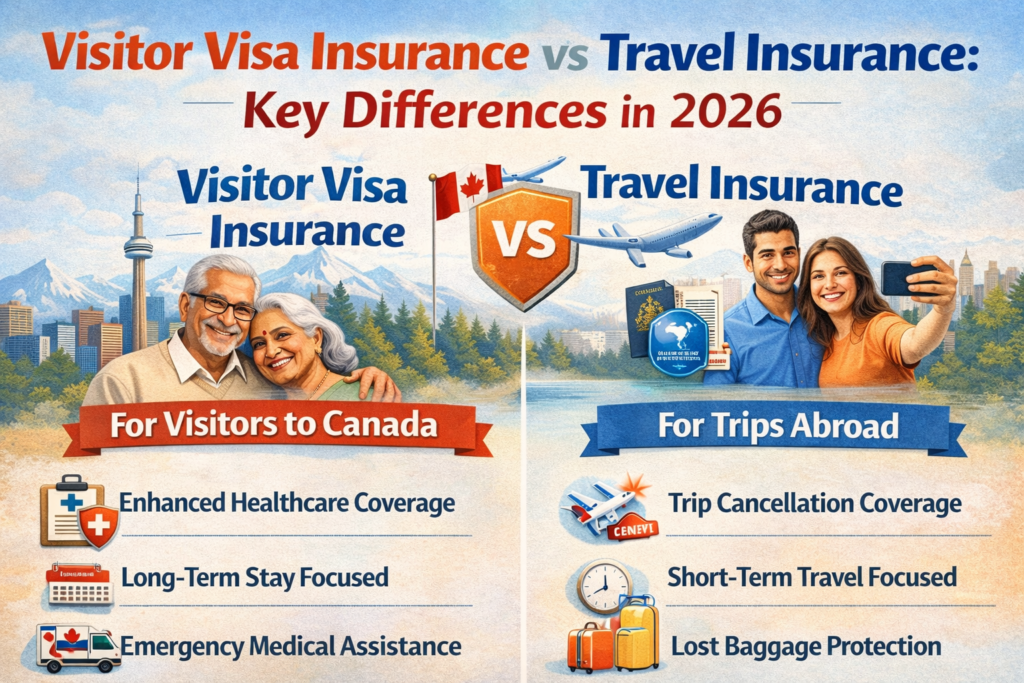
The first major distinction lies in why each policy exists. Visitor Visa Insurance is designed specifically for foreign nationals entering Canada on a visitor visa, including parents and relatives staying for weeks or months. It focuses heavily on medical emergencies within Canada’s healthcare system.
Travel insurance, by contrast, is typically built for short-term trips that may involve multiple destinations. It combines medical coverage with non-medical benefits such as baggage loss, trip delays, or cancellations. While helpful for vacations, it may not meet visa or stay-length requirements.
Coverage Scope and Medical Focus
Medical coverage is where the differences become very clear. Visitor-focused plans prioritise hospitalisation, emergency physician services, ambulance fees, diagnostic tests, and follow-up care. This reflects Canada’s high healthcare costs and the fact that visitors are not covered by provincial health plans.
Travel insurance often includes medical care but usually with lower limits and stricter conditions. It is designed for temporary disruptions, not extended stays. For someone visiting family in Canada for months, that difference can be financially significant.
In 2026, healthcare inflation makes choosing the right medical coverage even more critical, especially for older travellers.
Length of Stay and Policy Duration
One of the biggest practical differences lies in how long coverage can last. Visitor Visa Insurance policies are commonly available for several months up to one full year, aligning with extended visitor stays.
Travel insurance policies are often limited to shorter durations and may require renewal or extensions if the trip is prolonged. This can create coverage gaps, which are risky and sometimes invalid for immigration purposes.
For families hosting relatives, uninterrupted coverage is not optional—it is essential.
Immigration and Visa Compliance
Canadian immigration authorities are increasingly strict about insurance documentation. Visitor-focused policies are structured to meet visa conditions, including minimum coverage limits and proof of validity.
Travel insurance is not always accepted for visa purposes, particularly if it lacks sufficient medical coverage or originates from non-Canadian providers. Submitting the wrong insurance document can delay or jeopardise visa approval.
This is why Visitor Visa Insurance plays a critical role beyond health protection—it supports compliance with immigration requirements.
Pre-Existing Conditions and Stability Clauses
Another major difference involves pre-existing medical conditions. Visitor-oriented policies often offer coverage for stable pre-existing conditions, provided specific criteria are met. This is particularly important for older visitors with chronic health issues.
Travel insurance may exclude pre-existing conditions entirely or cover them only under very limited circumstances. In 2026, insurers are more precise about medical disclosures, making transparency and policy selection more important than ever.
Understanding these clauses helps families avoid denied claims during medical emergencies.
Claims, Billing, and Healthcare Access in Canada
Ease of access to healthcare services is another point of separation. Visitor-specific plans often include direct billing arrangements with Canadian hospitals, reducing the need for large upfront payments.
Travel insurance may require travellers to pay expenses first and seek reimbursement later, which can be stressful and financially challenging during emergencies.
Choosing Visitor Visa Insurance can mean faster treatment, less paperwork, and lower financial strain during urgent situations.
Cost Differences and Value Considerations
At first glance, travel insurance may appear cheaper. However, lower premiums often reflect limited medical coverage and shorter durations. When adjusted for length of stay and healthcare costs, visitor-focused plans often provide better overall value.
In 2026, the goal is not just affordability but adequacy. Saving money upfront can result in massive expenses later if coverage falls short.
Families should evaluate value based on protection, not just price.
Who Should Choose Which Option?
Travel insurance remains suitable for tourists on short trips, business travellers attending brief meetings, or individuals moving between several countries.
Visitors staying in Canada for extended periods, especially parents and relatives, benefit far more from Visitor Visa Insurance because it aligns with their legal status, healthcare needs, and length of stay.
Matching insurance to purpose is the safest and most practical approach.
The Growing Importance of the Right Choice in 2026
With longer visitor stays becoming more common and healthcare costs continuing to rise, the gap between these insurance types is widening. Making the wrong choice is no longer a minor inconvenience—it can affect visa status, finances, and access to care.
Families hosting loved ones deserve confidence, not uncertainty. Insurance should support that peace of mind, not complicate it.
Choose Coverage with Confidence
Understanding the difference between visitor-focused coverage and standard travel policies empowers families to make informed decisions. The right insurance protects health, finances, and legal compliance—all at once.
Parent Super Visa Insurance Company offers reliable, Canadian-approved solutions tailored for visitors and families. Explore trusted coverage options today and ensure your loved ones are protected every step of the way.